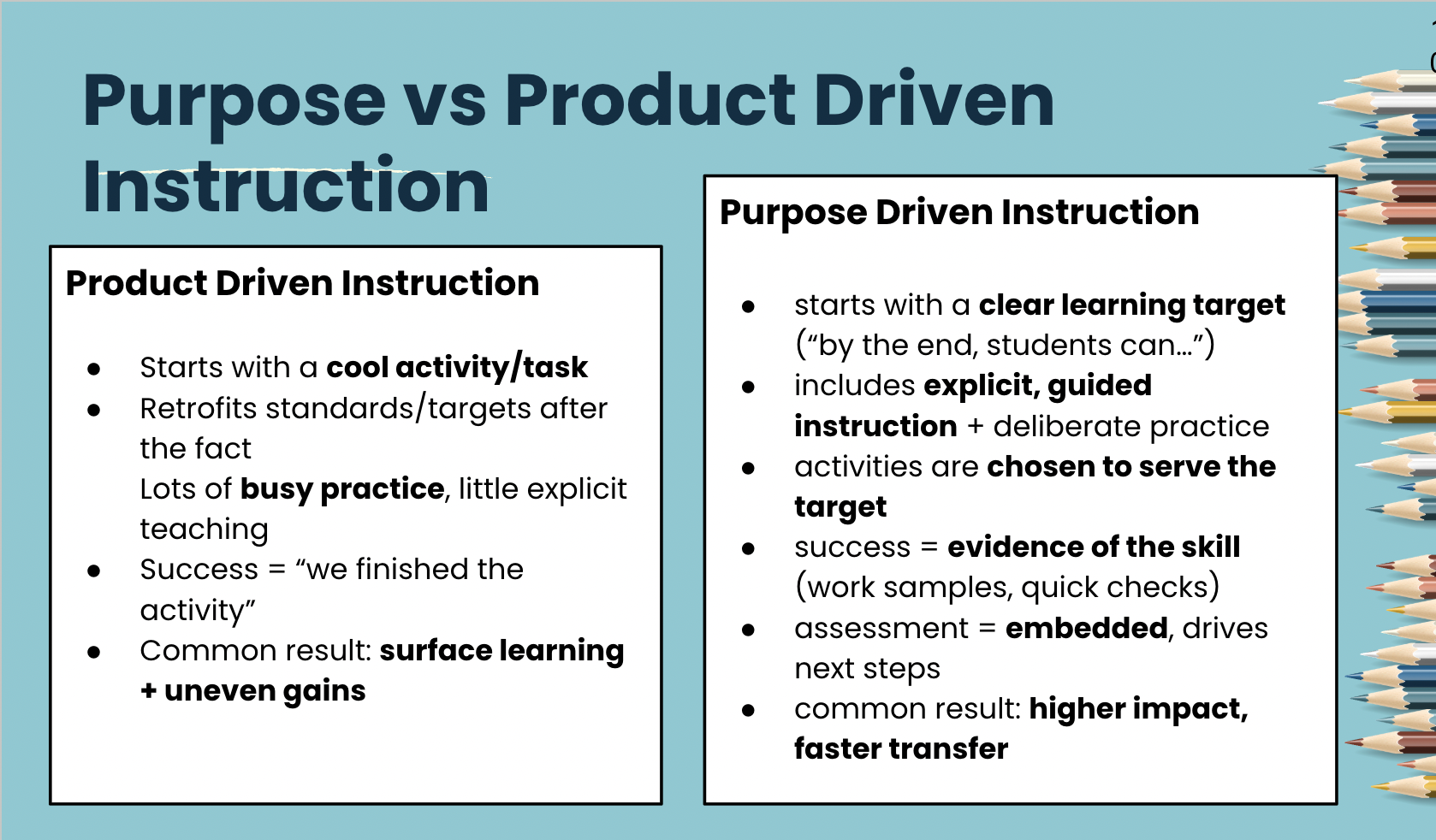
Purpose over Product - what you need to know before you Google
It was Halloween in 2000 and I had just been hired onto the Teacher on Call list. I had a few terrifying moments as a substitute teacher (think 22 year old in a grade 12 woodworking class), and was dreaming of a classroom to call my own. That morning, I received a call for a couple day job in a grade 4/5 classroom, I arrived not knowing yet that this would become my classroom for the rest of the year. The things I learned that year could fill many blog posts, as it still remains the most difficult year of my career, however that is not the purpose of this particular post. In 2000 the resources new teachers had were scarce, we had a few text books to use as support; which often were more difficult that helpful, (Math Makes (no) Sense). There was carefully bound resources to support your whole class novels which included graphic organizers and comprehension questions. Your best resource, if you were fortunate enough to be on a supportive staff, were the veteran teachers around you, who were willing to pass their resources and knowledge to you. That first year, I wouldn’t have survived had it not been the wonderful teachers and principal around me willing to lend a hand.
My first year experience, although only a two decades ago, is vastly different from the experience of our new teachers today. With AI and Teachers Pay Teachers at their finger tips, first year teachers flood the internet looking for activities for their classroom. As a teacher coach, I spend countless hours working alongside new teachers helping support their first years in the classrooms. Year over year, I notice teachers planning activities that they find on social media but when asked to assess, they are unsure of what learning or standard those activities taught (this is not meant as a criticism they often just don’t know what they don’t know).
A simple shift in how we use AI or Google can significantly transform the efficiency and value of the learning activities we find. When we begin with the purpose of the learning, rather than the product, our searches become more intentional and better aligned with what students actually need to learn. This approach also helps avoid the common pitfall of multiple grades and classrooms across a school using the same activities simply because they “saw a great idea online.”
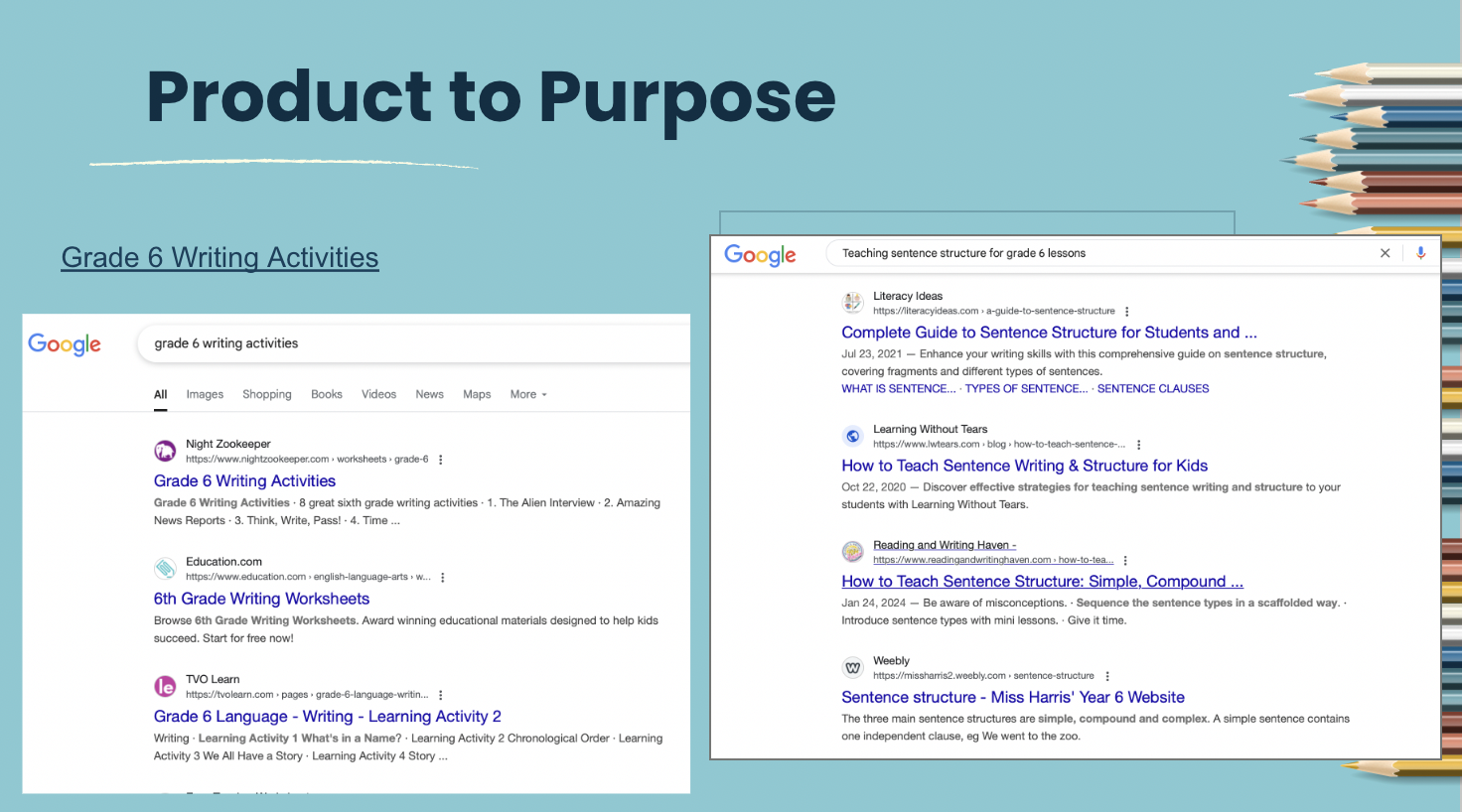
The shift is simple: instead of searching for writing activities for Grade 6, start by identifying the standard or skill you want to teach and search for that instead. For example, searching for mentor texts that model rich descriptive language or activities that help students use a variety of sentence starters will yield ideas that are clearly tied to the purpose of your lesson.
If your learning target is, “I can use a strong hook to introduce my writing,” use that language directly in your search. Looking for activities and mentor texts that explicitly teach that skill ensures your instruction is focused, purposeful, and aligned with the intended learning.
This small shift,purpose before product, leads to more intentional planning, more meaningful learning opportunities, and greater coherence across classrooms.