Every Writer Starts Somewhere
Ralph Tells a Story by Abby Hanlon is one of my favourite books for setting the stage for writing in my classrooms. Ralph is an endearing student who struggles with stamina, ideas, and finding his story. As the book unfolds, we watch Ralph begin to tell his story and gradually gain confidence in his abilities as an author. The story beautifully reflects the diversity of learners in our classrooms and reminds us that every writer is on a journey.
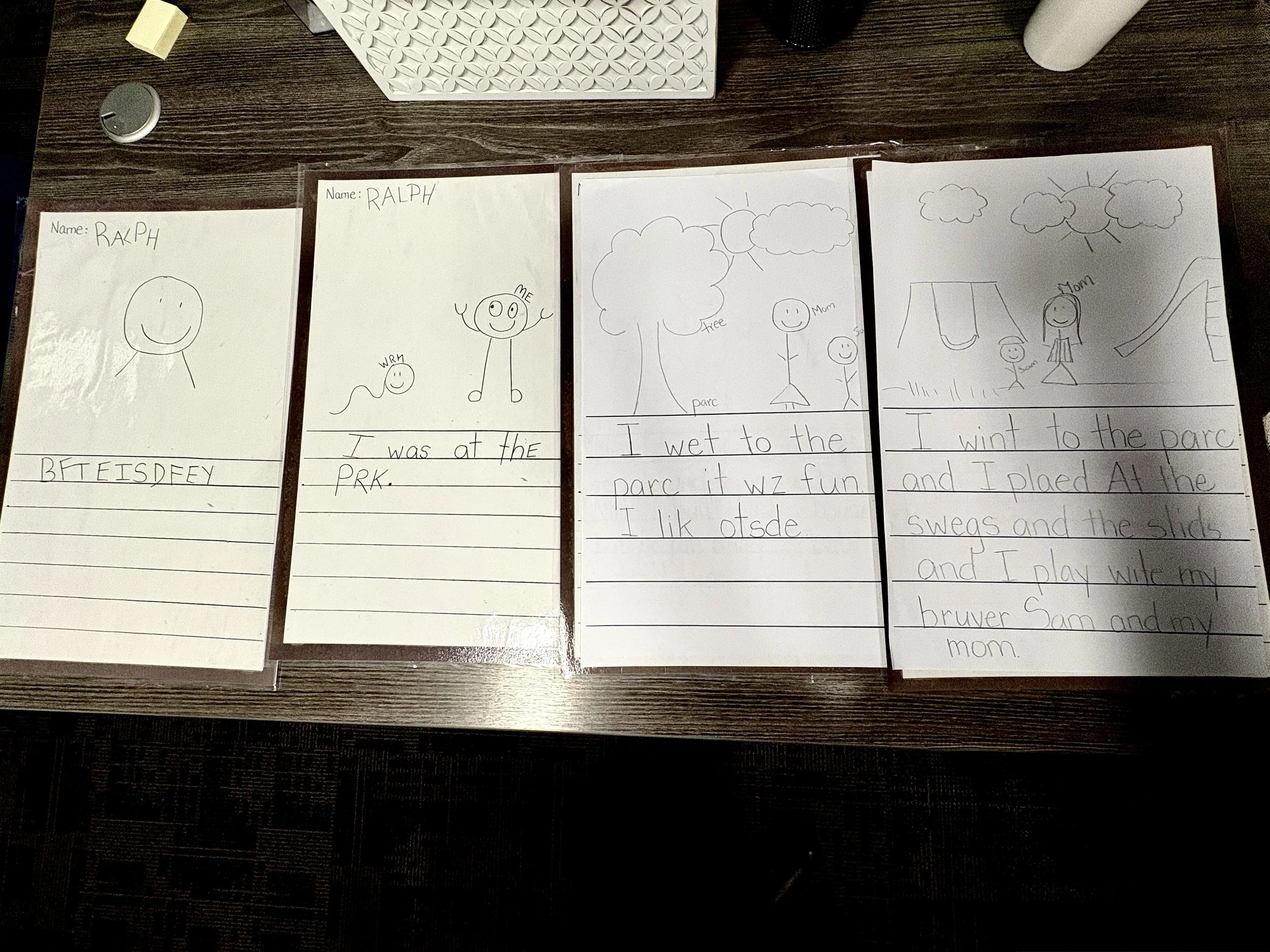
A few years ago, while teaching in a Grade 1 classroom, I told my students that I had “found” the rest of Ralph’s writing. Together, we examined samples of “his writing” and noticed how it had progressed over time. We talked about the strengths in Ralph’s writing and identified areas where he could continue to grow. My Grade 1 students became the “teachers,” learning to look closely at writing for clues about where a writer might go next. It was a powerful reminder that even young learners can thoughtfully analyze writing and set goals.
Before we can effectively plan our writing instruction, we must first understand what our students already know. One critical mistake I made early in my teaching career was repeating the same writing projects year after year without truly knowing what my students needed to move forward as writers.
At our school, we begin with a School-Wide Write. Each grade level agrees on a common topic, and during a dedicated writing block, students spend time planning and organizing their ideas. The grade-level teachers, the classroom support teacher, and I then collaboratively assess the writing.
Each piece is assessed using a shared rubric aligned with the BC Performance Scales. While these scales are not perfect, they provide a strong starting point for developing shared language and expectations. Every piece of writing is double-marked, and when discrepancies arise, we engage in professional dialogue to reach consensus. This process creates rich opportunities to discuss the qualities of effective writing and to align our expectations across classrooms.
Once assessment is complete, student results are recorded on a class-at-a-glance document. This allows us to see patterns of strength and need across key writing traits such as Ideas, Organization, Meaning, and Conventions. This collective view helps us identify areas of stretch and strength and enables us to set both whole-class and individual writing goals with intention.

Class at a Glance documents and RTI model diagram.
